Name: Mr. Ritesh Panda, Batch 2022–26
Department: Fashion and Lifestyle Accessory Design Department
Category: CBDP
Campus : NIFT Bhubaneswar
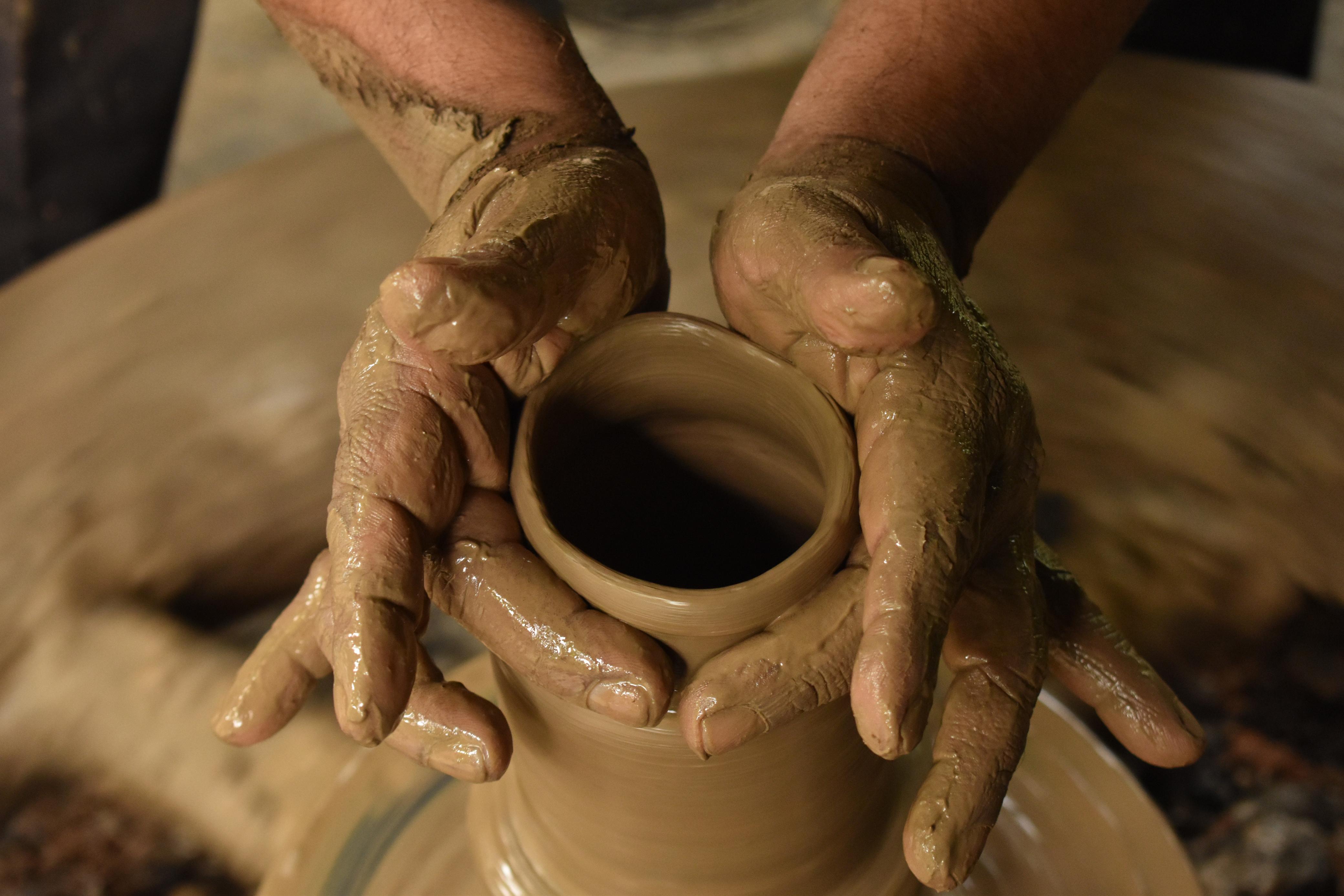
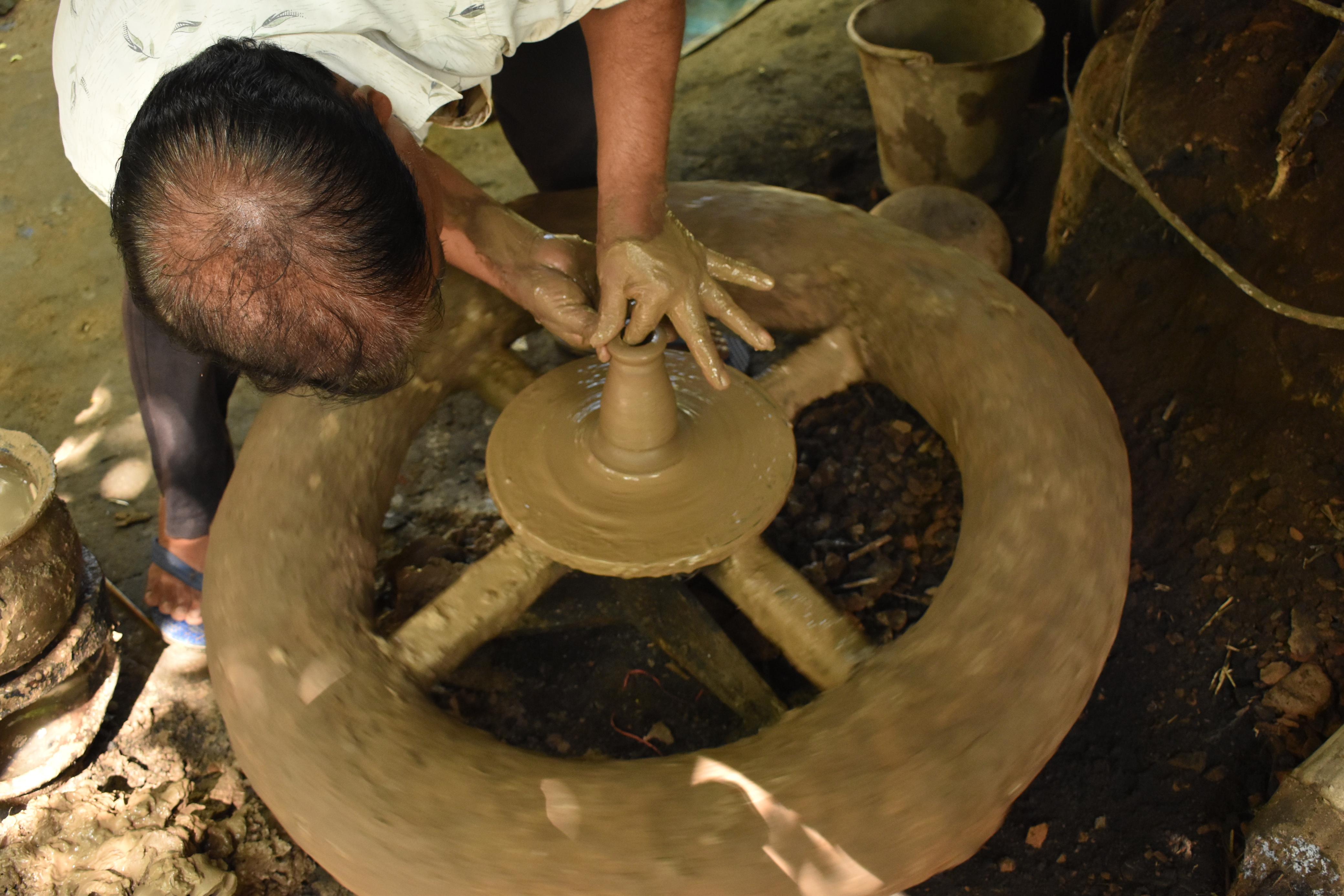
Terracotta Cluster, Keonjhar Keonjhar, Odisha, is renowned for its vibrant terracotta craft tradition, practiced by skilled artisans who transform locally available clay into decorative and functional products. The cluster produces intricately designed figurines, tribal motifs, home décor items, and utility ware that reflect the region’s rich cultural heritage. Terracotta craftsmanship in Keonjhar sustains traditional knowledge while generating rural livelihoods. With growing emphasis on design innovation and market linkage, the cluster continues to preserve Odisha’s indigenous craft legacy while adapting to contemporary consumer preferences.

About the project
Keonjhar Terracotta CBDP Cluster: Craft Revival Through Contemporary Design Intervention by NIFT Accessory Design Batch 2022–26
Introduction
Crafts form an integral part of India's cultural identity, embodying centuries of knowledge, tradition and community practices. Among Odisha's rich craft traditions, terracotta occupies a significant place due to its historical relevance, sustainable nature, and artistic versatility. The Keonjhar Terracotta Cluster, known for its skilled artisans and distinctive clay craftsmanship, represents a vibrant tradition that has been passed down through generations. However, like many traditional craft sectors, the cluster faces challenges arising from changing consumer preferences, limited market access, product stagnation, and competition from mass-produced alternatives.
The Craft Based Design Project (CBDP) undertaken by the Accessory Design Batch 2022–26 under the guidance of Asst. Prof Ms. Vidhi Nagar of NIFT Bhubaneswar sought to address these challenges through meaningful design intervention. The project aimed to explore opportunities for product diversification while preserving the intrinsic identity of the craft. By engaging directly with artisans, understanding their processes, and studying contemporary lifestyle trends, the students developed a range of products that bridged tradition and modernity. The initiative focused not merely on creating new products but on strengthening artisan livelihoods through design-led innovation.
Understanding the Craft of Keonjhar Terracotta
Terracotta, literally meaning "baked earth," is among the oldest forms of human artistic expression. In Keonjhar, the craft is deeply intertwined with local culture, rituals, and everyday life. Traditionally, artisans have produced utilitarian objects such as cooking vessels, storage containers, lamps, ritual objects, toys, figurines, and decorative artefacts. The craft begins with the collection and preparation of locally available clay. The clay is cleaned, kneaded, and mixed to achieve the desired consistency. Artisans then employ various forming techniques depending on the nature of the product. After shaping, the objects are dried naturally, refined through surface finishing, and subsequently fired in traditional kilns. The firing process imparts the characteristic warm reddish-brown colour associated with terracotta.
The beauty of Keonjhar terracotta lies in its organic textures, earthy aesthetics, handcrafted imperfections, and strong connection to the local environment. Traditional motifs often draw inspiration from tribal culture, nature, folklore, animals, and religious symbolism. The handmade nature of each piece lends uniqueness and authenticity that contemporary consumers increasingly value.
The Need for Design Intervention While the craft possesses immense artistic and cultural value, artisans often depend on a limited range of products and seasonal demand. Traditional product categories may not always align with contemporary lifestyles, particularly among urban consumers seeking functional, aesthetically refined, and space-conscious products. The CBDP therefore focused on identifying opportunities where traditional terracotta techniques could be adapted to meet present-day consumer needs. Rather than replacing traditional practices, the intervention sought to expand the scope of the craft through product innovation.
The primary objectives included:
- Product diversification beyond conventional artefacts.
- Development of market-oriented collections.
- Enhancement of perceived value through design.
- Exploration of contemporary forms and applications.
- Preservation of traditional skills and techniques.
- Creation of sustainable livelihood opportunities for artisans.
The project emphasized a collaborative approach where artisans were regarded as co-creators rather than mere producers. Their technical expertise, material understanding, and experiential knowledge played a central role throughout the design process.
Role of NIFT Accessory Design Students
The Accessory Design students of Batch 2022–26 approached the project as an immersive learning experience. The field engagement enabled them to understand the realities of craft ecosystems, material behaviour, production constraints, and artisan capabilities.
Students conducted extensive research involving:
- Cluster visits and artisan interactions.
- Process documentation.
- Material studies.
- Market analysis.
- Consumer trend forecasting.
- Product benchmarking.
- Lifestyle and space studies.
This comprehensive understanding formed the foundation for subsequent design development. Students worked closely with artisans to translate ideas into feasible products while respecting the technical limitations and strengths of terracotta.
The project also allowed students to apply principles of user-centred design, sustainability, material innovation, and design thinking in a real-world context. Such exposure is invaluable for future designers, helping them understand how design can contribute to social and economic development.
Exploration of Terracotta Techniques
One of the most significant aspects of the project was the extensive exploration of traditional terracotta-making techniques. Instead of restricting designs to a single production method, students experimented with multiple techniques to unlock diverse forms and applications.
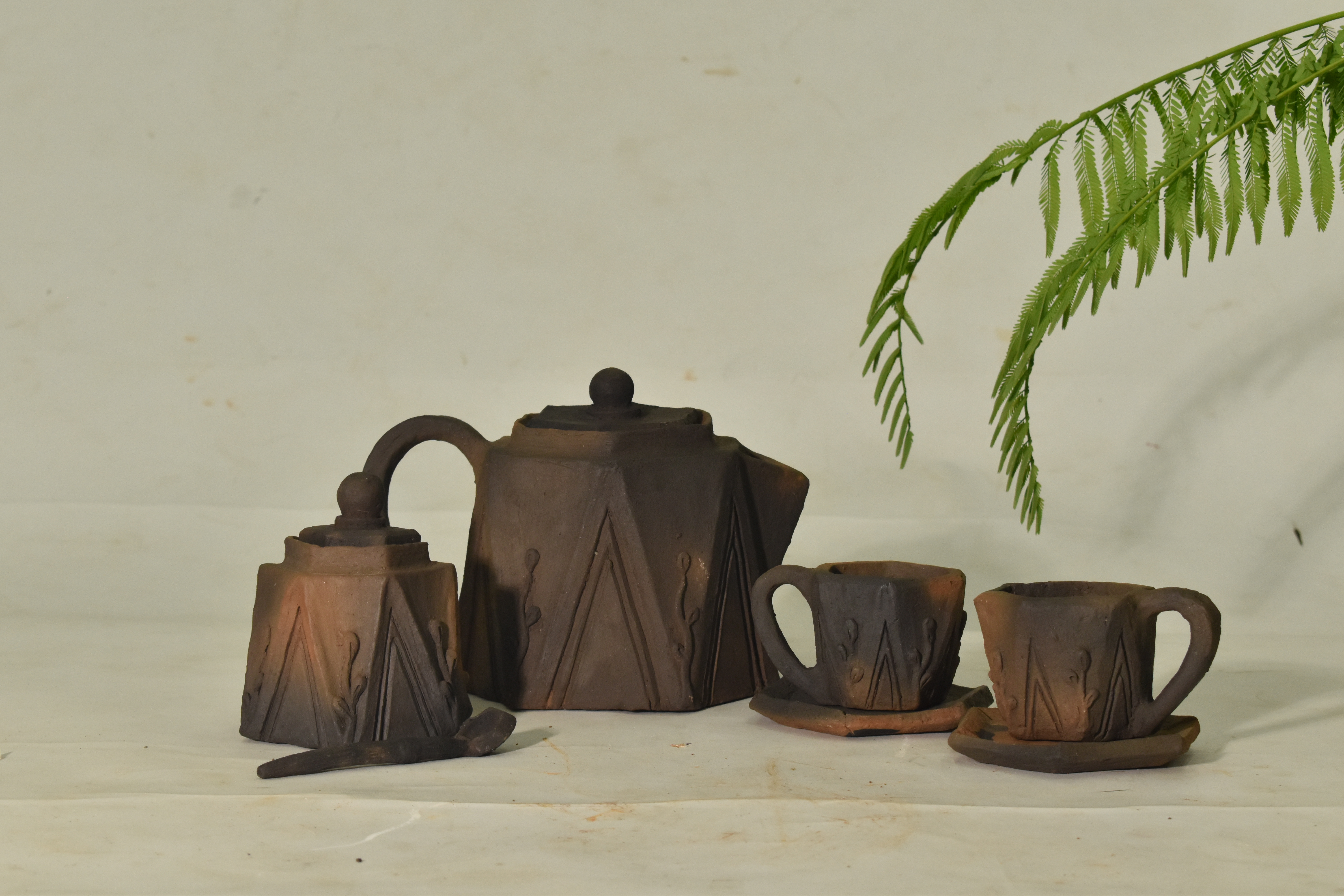
Slab Technique
The slab technique involved rolling clay into flat sheets that could be cut, folded, joined, and manipulated into geometric forms. This method enabled students to create contemporary products characterized by clean lines and architectural aesthetics.
Products developed through slab construction included:
- Modern lighting fixtures.
- Planters.
- Table organizers.
- Modular storage units.
- Decorative panels.
- Minimalistic vases.
The technique proved particularly effective for creating structured forms suitable for urban interiors.
Pinching Technique
Pinching is among the oldest clay-forming methods and relies entirely on hand manipulation. Students explored this technique to create products that celebrated craftsmanship and human touch.
The resulting forms displayed organic curves and tactile qualities, making them suitable for:
- Decorative bowls.
- Small planters.
- Candle holders.
- Aroma diffusers.
- Table accessories.
The technique highlighted the individuality of handcrafted production and aligned well with contemporary preferences for artisanal products.
Throw Wheel Technique
The potter's wheel remains one of the most iconic tools in terracotta production. Students worked with artisans to understand the nuances of wheel throwing and explored its potential beyond conventional vessels.
The wheel was utilized to create:
- Contemporary vase collections.
- Table lamps.
- Pendant lighting components.
- Serving ware.
- Decorative containers.
- Sculptural forms.
Combining wheel-thrown components with other construction methods resulted in innovative hybrid products that retained traditional craftsmanship while introducing modern aesthetics.
Surface Treatments and Textural Exploration
In addition to form development, considerable emphasis was placed on surface experimentation. Students explored:
- Carving.
- Incising.
- Perforation.
- Layering.
- Relief work.
- Burnishing.
Natural finishing techniques.
These explorations generated products with enhanced visual appeal and greater market differentiation.
Product Development Across Categories
A key objective of the CBDP was to diversify the product range and demonstrate the versatility of terracotta as a contemporary material. Students developed collections across multiple categories.
Lighting Design
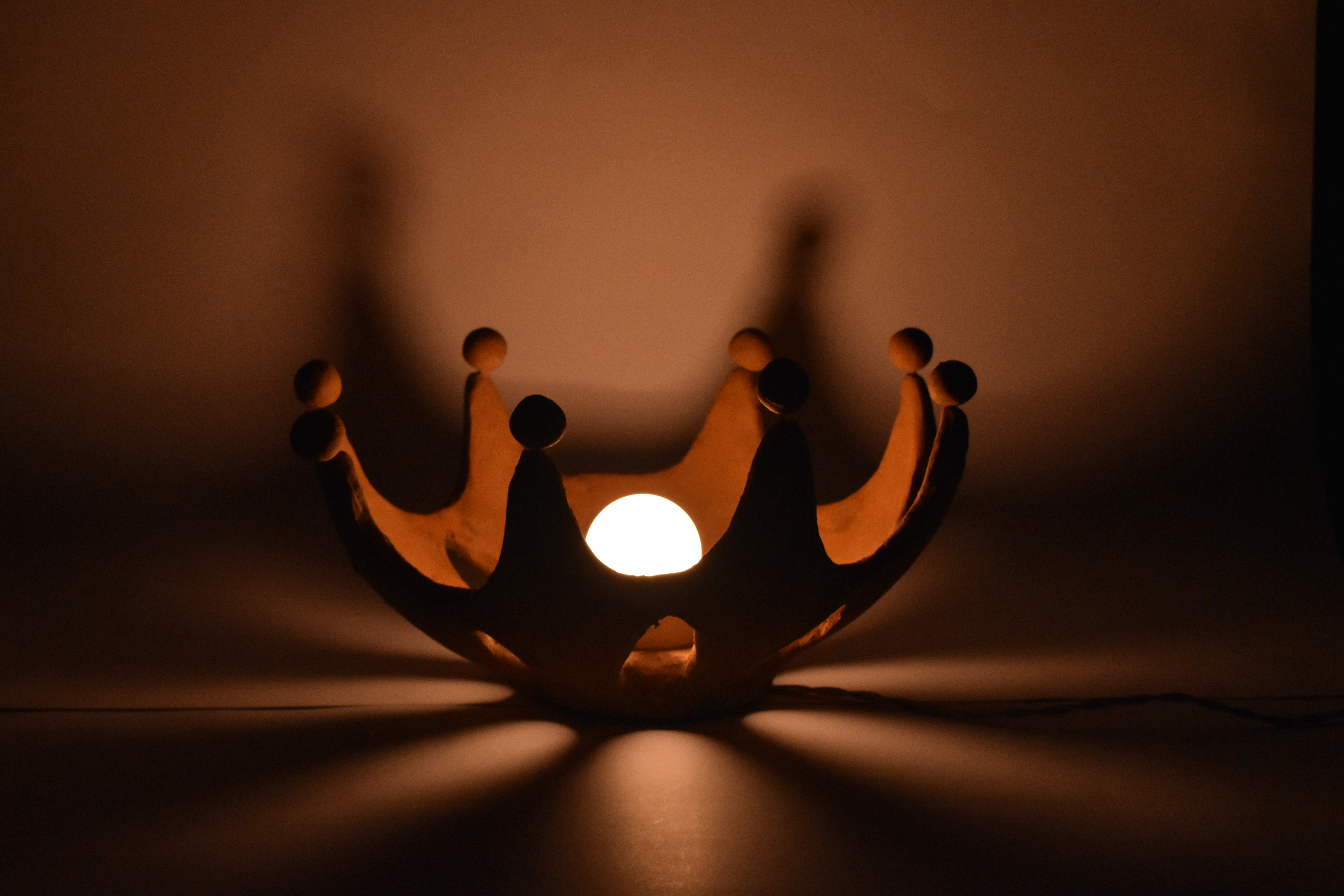
Lighting emerged as one of the most promising areas for intervention. The natural translucency of perforated terracotta and its warm earthy character created unique opportunities for atmospheric lighting.
Students designed:
- Pendant lamps.
- Table lamps.
- Wall sconces.
- Ambient lanterns.
- Modular lighting systems.
Various perforation patterns inspired by tribal motifs, natural textures, and geometric forms were incorporated. When illuminated, these patterns produced intricate light and shadow effects, enhancing the experiential quality of the products.
The lighting category demonstrated significant commercial potential due to growing demand for handcrafted home décor products.
Vase Collections
The vase collection explored a balance between sculptural expression and functional utility. Students moved beyond conventional forms and experimented with asymmetry, modularity, stacking, and geometric abstraction.
The designs catered to contemporary interior spaces while preserving the handcrafted essence of terracotta. Some collections incorporated mixed-material elements, creating products suitable for premium markets.
Functional Home Accessories
A major focus of the project was the development of practical products that could seamlessly integrate into modern lifestyles.
These included:
- Desk organizers.
- Pen stands.
- Key holders.
- Storage containers.
- Tray systems.
- Kitchen accessories.
- Utility holders.
By transforming terracotta into everyday-use products, students expanded the relevance of the craft beyond decorative consumption.
Lifestyle and Decorative Products
Students also explored products intended to enrich contemporary living spaces.
These included:
- Candle stands.
- Incense holders.
- Aroma diffusers.
- Decorative sculptures.
- Tabletop accents.
- Wall décor.
These products leveraged terracotta's tactile warmth and natural aesthetic appeal, aligning with contemporary preferences for sustainable and handcrafted home environments.
Planters and Green Living Solutions
The growing popularity of indoor gardening and biophilic design inspired a series of planter concepts.
Students developed:
- Hanging planters.
- Desktop planters.
- Modular planter systems.
- Self-watering concepts.
- Vertical gardening units.
The breathable nature of terracotta made it an ideal material choice, reinforcing the sustainability narrative of the collection.
Sustainability and Material Responsibility
An important dimension of the project was its emphasis on sustainability. Terracotta is inherently eco-friendly, being derived from natural clay and requiring minimal processing. It is biodegradable, locally sourced, and possesses a significantly lower environmental footprint compared to many industrial materials.
The project encouraged students to consider:
- Responsible material use.
- Waste reduction.
- Long product life cycles.
- Repairability.
- Local sourcing.
- Sustainable production systems.
Such considerations are increasingly important within contemporary design practice and contribute to the long-term viability of craft-based industries.
Impact on Artisan Livelihoods
The ultimate objective of the CBDP was to strengthen artisan livelihoods through design intervention. Product diversification has the potential to open new markets and reduce dependence on traditional product categories.
The newly developed collections created opportunities for artisans to:
- Access urban and premium markets.
- Increase product value.
- Expand customer segments.
- Improve income generation.
- Develop new technical capabilities.
- Build resilience against market fluctuations.
By introducing contemporary applications without compromising traditional techniques, the project demonstrated how design can act as a catalyst for socio-economic development.
The experience gained by understanding the craft ecosystem reinforced the role of designers as facilitators of change who can contribute meaningfully to preserving cultural heritage while addressing contemporary needs.
Students learned to negotiate the delicate balance between innovation and preservation, ensuring that design interventions remained respectful, relevant and feasible.
Conclusion
The Keonjhar Terracotta CBDP undertaken by the NIFT Accessory Design Batch 2022–26 stands as an example of how traditional crafts can be revitalized through thoughtful design intervention. By exploring diverse product categories such as lighting, vases, planters, lifestyle products, and functional accessories, students demonstrated the versatility and contemporary relevance of terracotta.
Through the use of traditional techniques including slab construction, pinching, wheel throwing, carving, and perforation, the project successfully preserved the essence of the craft while expanding its possibilities. The collaboration between artisans and young designers created a platform for mutual learning, innovation, and cultural exchange.
More importantly, the initiative highlighted the potential of design as a tool for sustainable livelihood generation. By connecting traditional knowledge systems with contemporary markets, the project contributed towards ensuring that the rich terracotta heritage of Keonjhar continues to thrive for future generations while remaining economically viable for the artisan community.
The CBDP ultimately reaffirmed the belief that meaningful design intervention does not replace tradition; rather, it empowers tradition to evolve, adapt, and flourish within changing social and market contexts.
NIFT Assistant
Online — Ready to help
AI