Traditional Crafts used in the Collections
Weaving(JamKhambalia) | Applique(Ahmedabad) | PichhwaiPainting | JawajaWeaving | IkatWeaving
Jamkhambaliya is located in Devbhoomi Dwarka District in Gujarat, approximately 57 km from Jamnagar. Geographically placed at 22°12’ N, 69°39’ E, the region is semi-arid with a long tradition of pastoralism and artisanal livelihood.
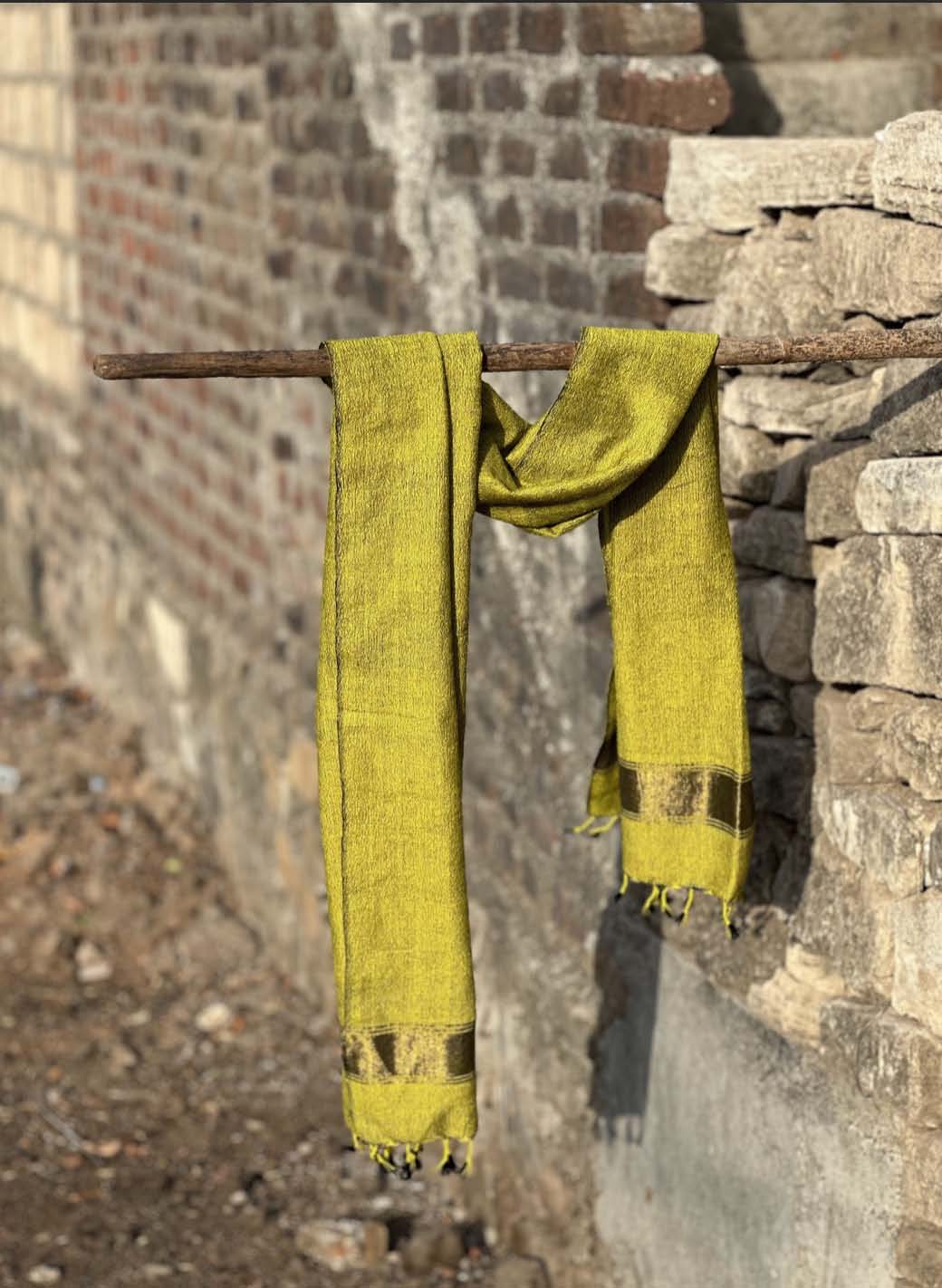
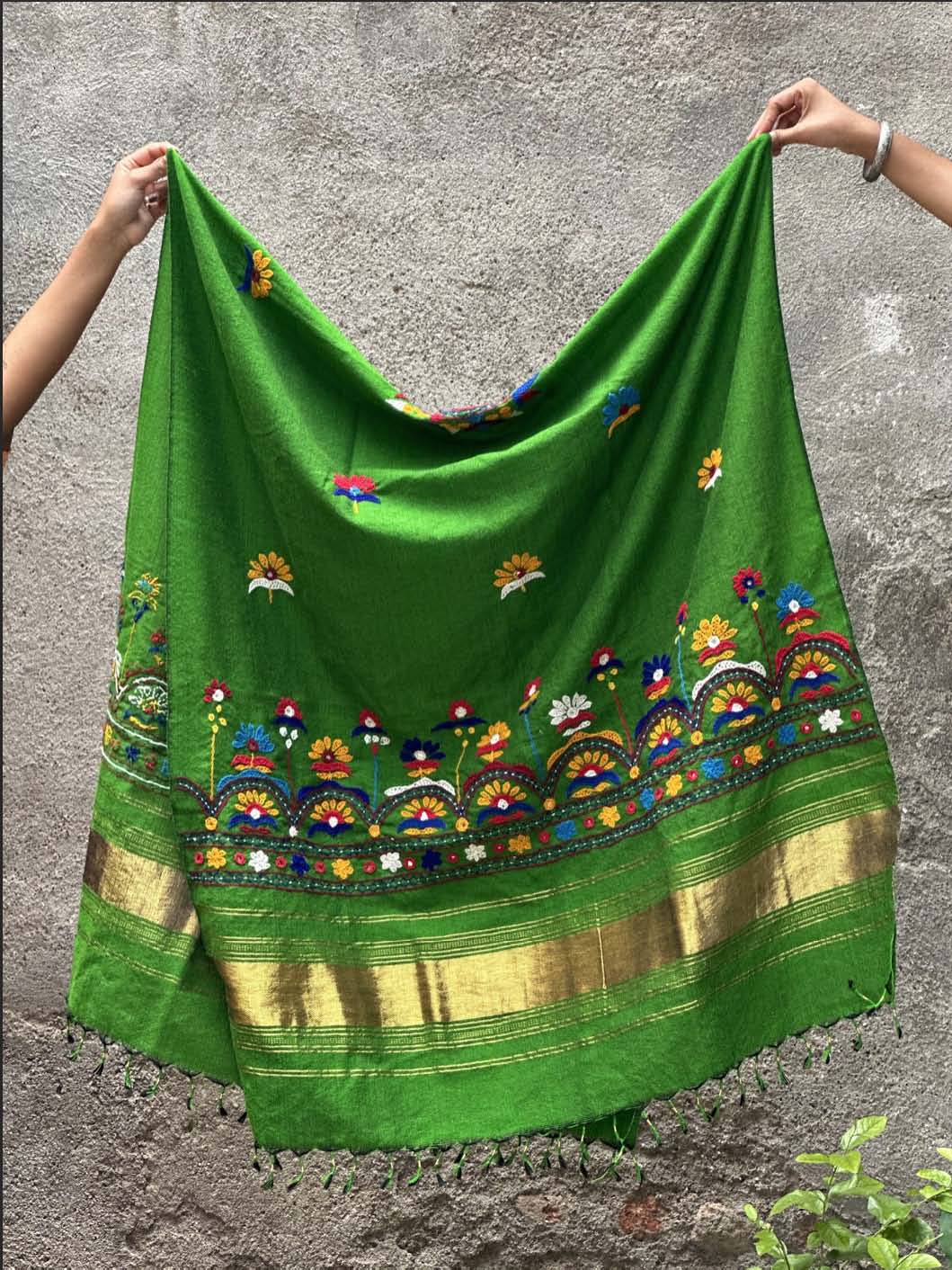
Jamkhambaliya Shawls represent a contemporary yet culturally rooted textile tradition evolving from the historic Kachchhi dhabla weaving. Practiced for nearly 40 years in Jamkhambaliya, Gujarat, this craft is led primarily by Vankar weavers of the Maheshwari community, who migrated from Kutch and adapted traditional methods into a thriving local micro-industry. The shawls are woven on both pit looms and frame looms using merino wool, terry wool, acrylic yarns, and zari, and often feature extra-weft motifs, tie-dye patterns, and post-weave embroidery. Over time, the craft has moved from utilitarian textiles to high-value contemporary products such as stoles, kaftans, table linens, jackets, and saris, reflecting both market responsiveness and artisan innovation.
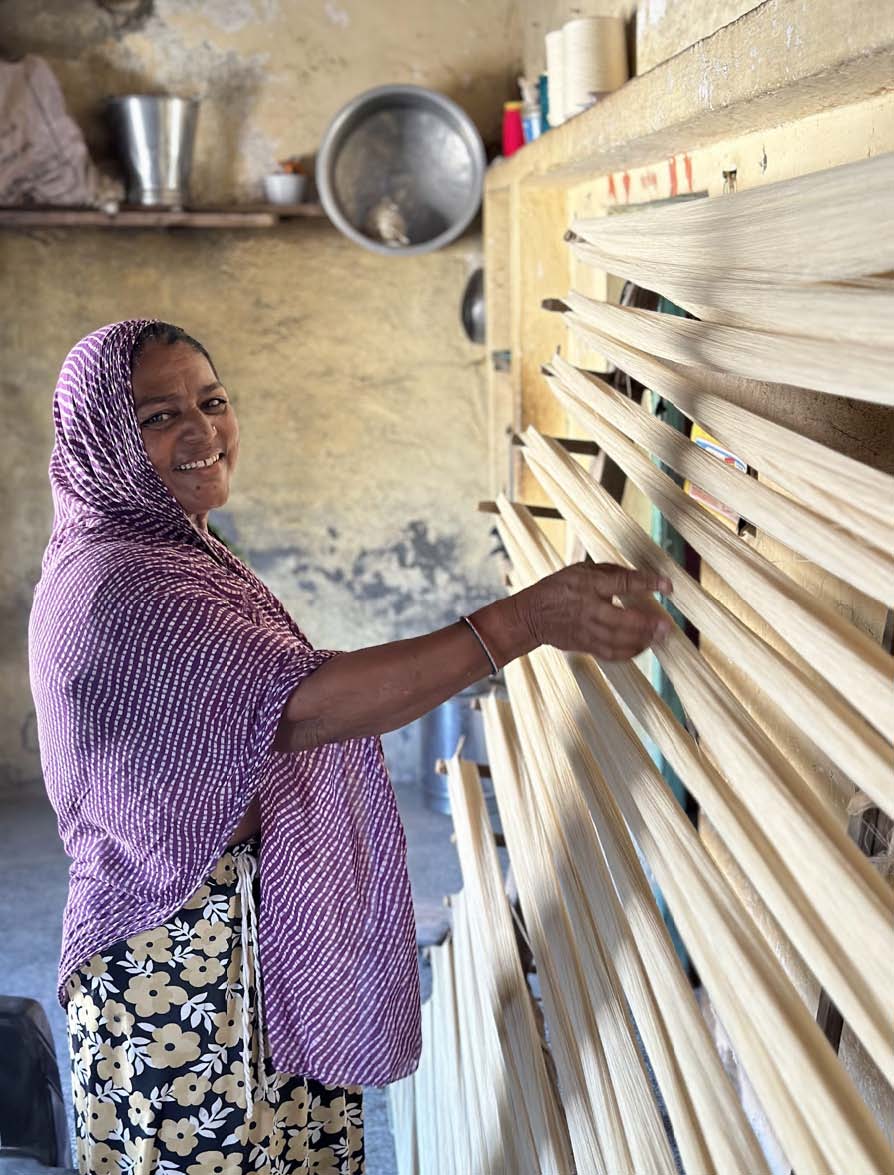
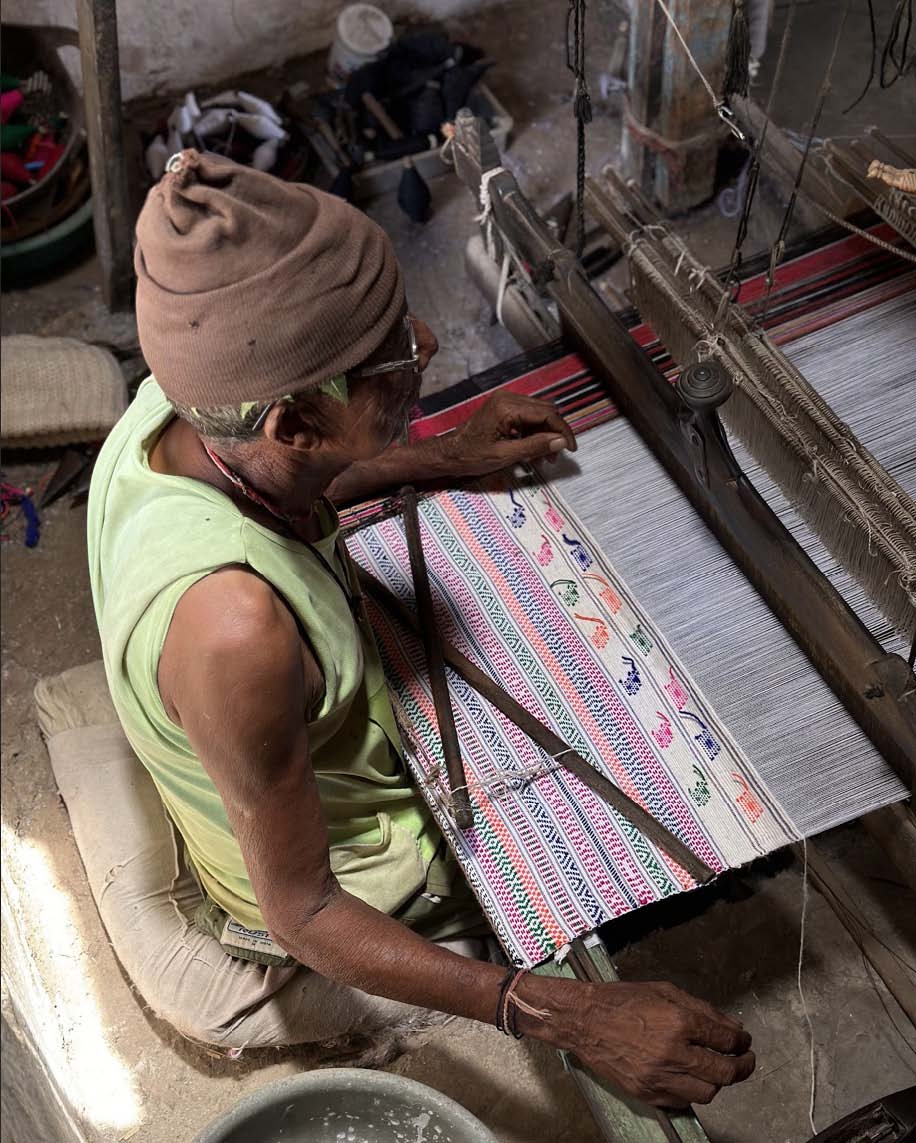
Shawl weaving in Jamkhambhaliya, traditionally practiced on pit looms, has gradually expanded to include frame looms as a response to contemporary design needs, space limitations, and evolving production methods. The shift to frame looms demonstrates how a heritage craft can adapt while preserving the tactile essence and cultural value of handwoven textiles.
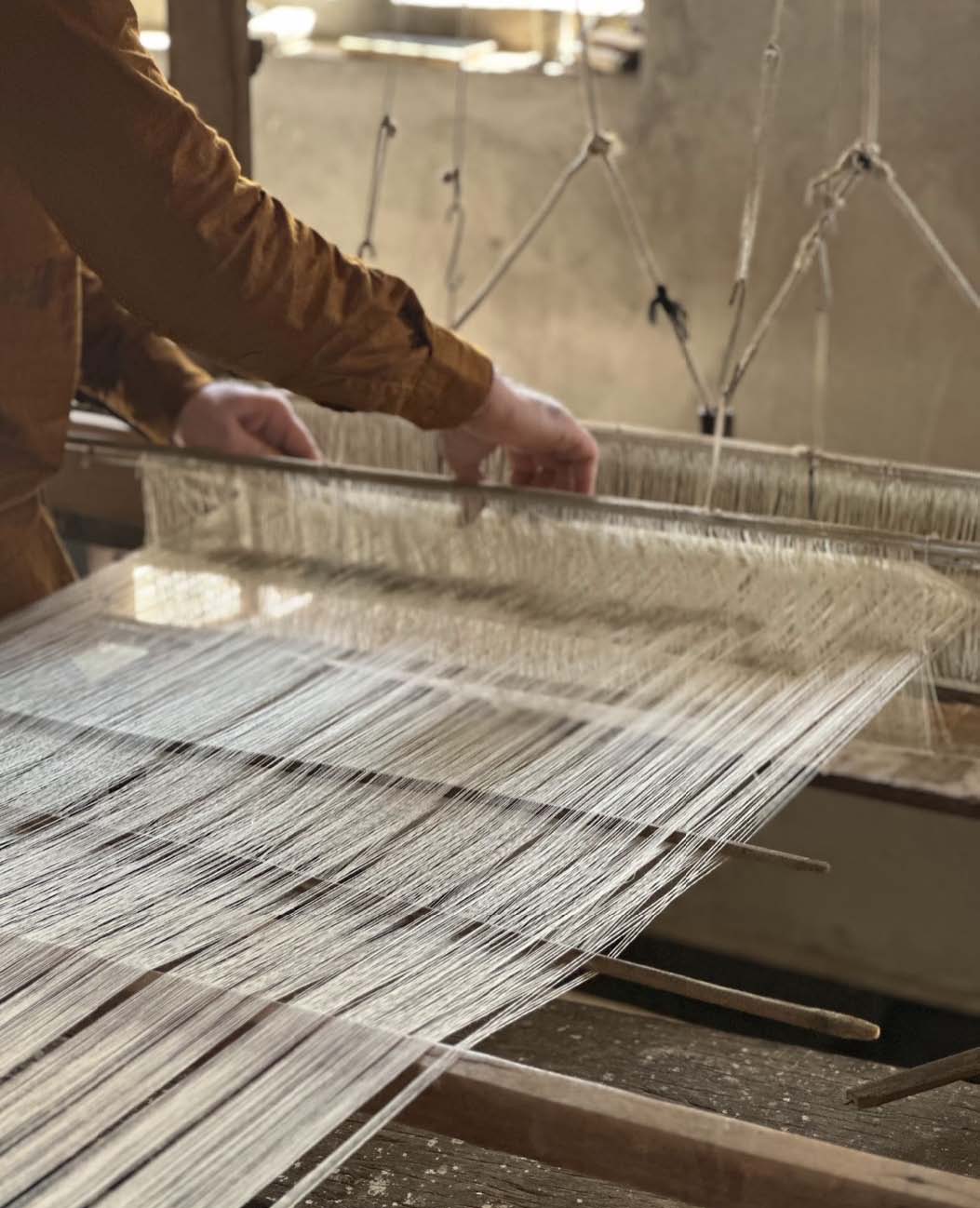
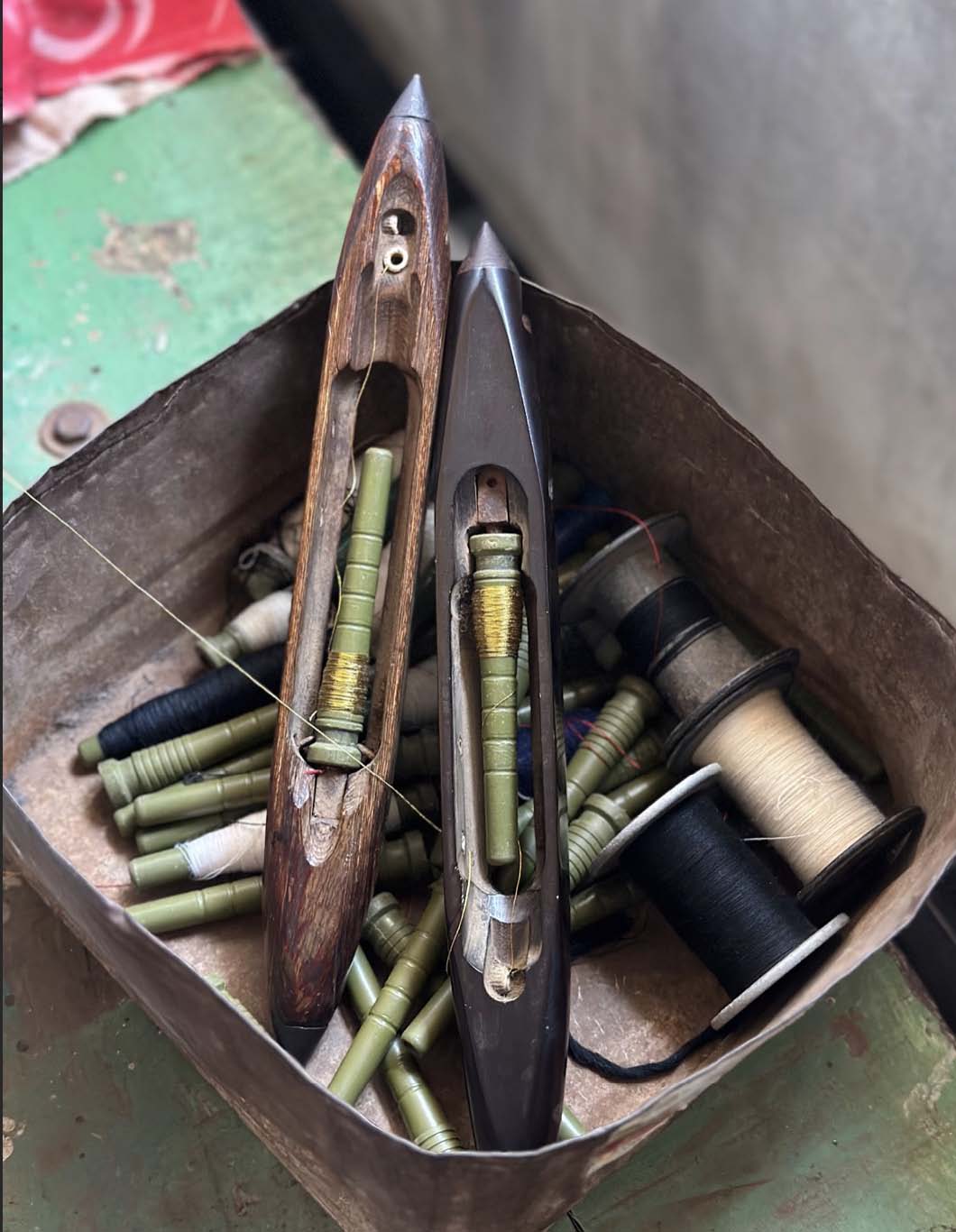
During weaving, the artisan inserts the weft using a shuttle while raising and lowering different sets of warp threads to form the fabric structure. Common techniques include plain weave for a smooth surface, twill weave for diagonal textures, and extra weft insertions to introduce surface ornamentation. Every movement is controlled by hand, allowing the fabric to develop gradually with organic variations that highlight the authenticity of handweaving.
The weaving of Jamkhambhaliya shawls is supported by a set of traditional hand tools that enable precision and rhythm at every stage. The main tool is the loom — either a pit loom or a frame loom — which holds the warp threads under tension. The shuttle carries the weft yarn across the warp, while the reed or hand beater packs each pick into place to form the fabric. Heddles control the lifting of warp sets to create different weave structures, and bobbins or pirns ensure smooth weft release inside the shuttle. Additional tools like lease sticks, scissors, and needles help prevent tangling, manage repairs, and finish the shawl. Together, these simple but essential tools make handweaving efficient while preserving the craft’s distinctive handmade character.
Motifs and design language in Jamkhambhaliya shawls have evolved over time while maintaining a strong connection to regional aesthetics. Traditional designs are rooted in geometric patterns, expressed through:
These motifs are woven into the fabric rather than being surface-decorated, making them durable and integral to the textile’s identity. The contemporary interpretation of motifs has expanded to include minimalist layouts, tonal gradients, asymmetric compositions, and experimental color combinations, allowing the shawls to cater to modern tastes and global markets.
The embroidery is carried out after weaving, once the shawl is fully finished and off the loom. Artisans map out the design on the surface—either freehand or using minimal markings—and embellish selective areas rather than covering the whole fabric. This approach preserves the breathable warmth of wool while adding subtle artistic character.