Traditional Crafts used in the Collections
Weaving(JamKhambalia) | Applique(Ahmedabad) | PichhwaiPainting | JawajaWeaving | IkatWeaving
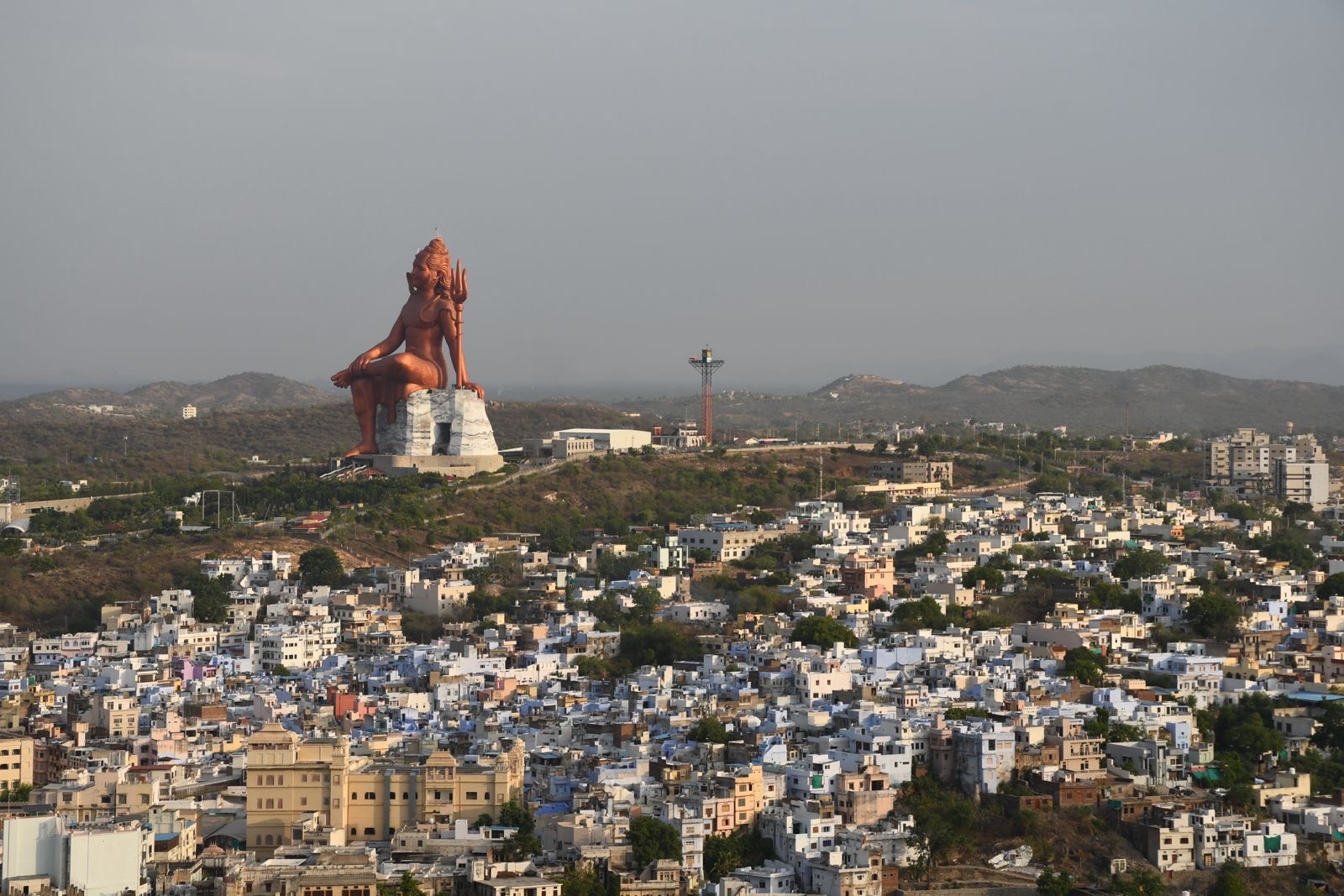
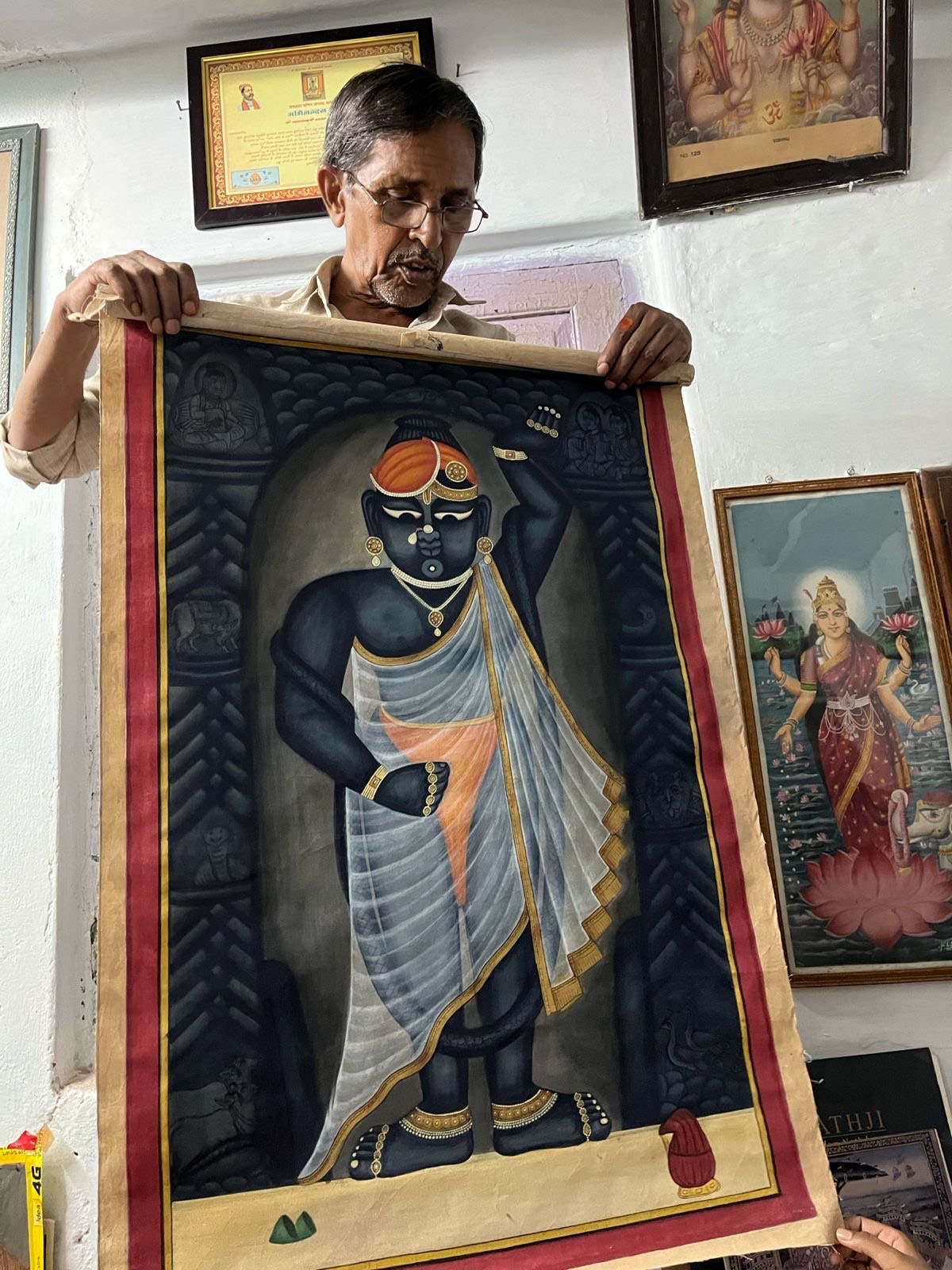
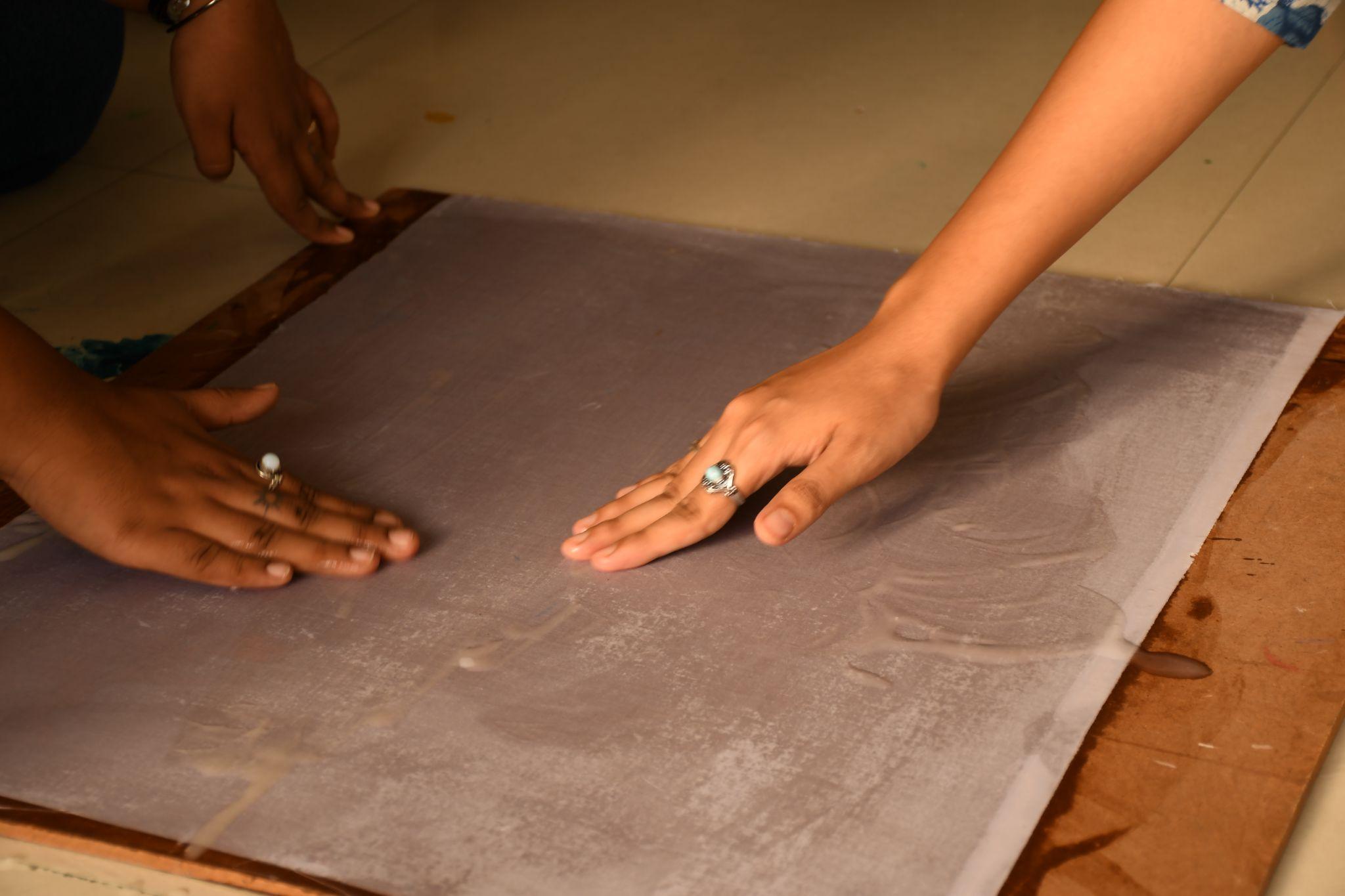
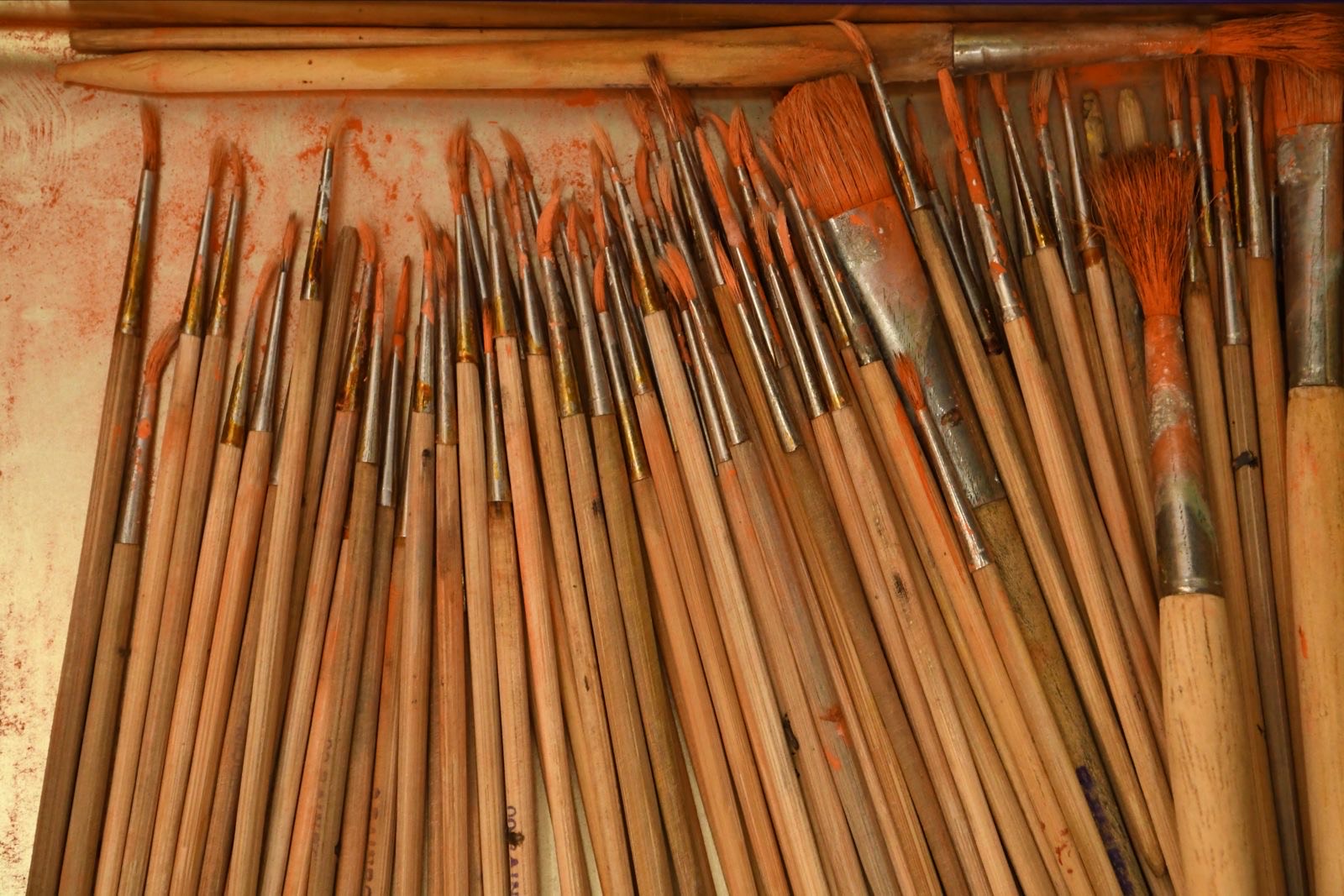
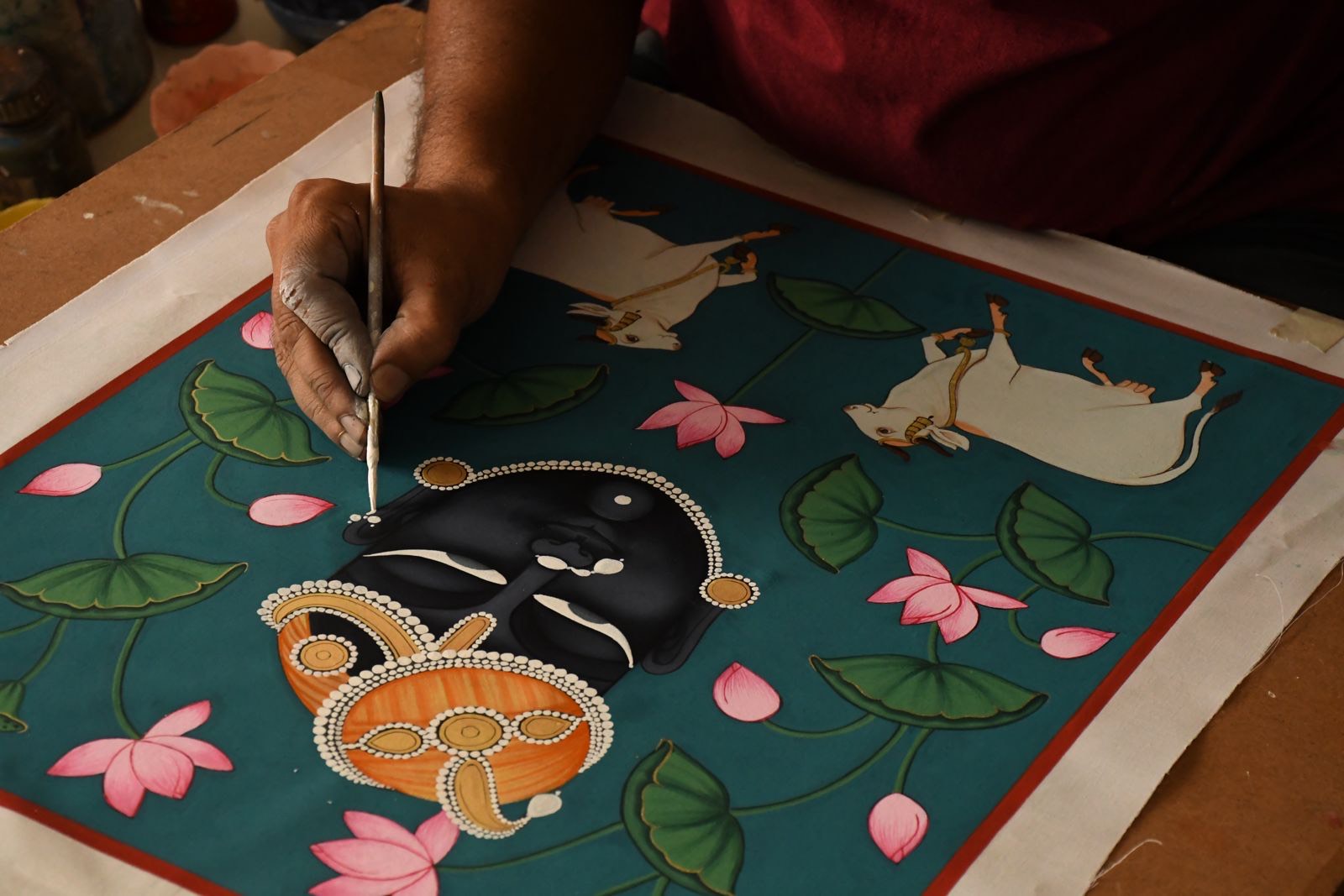
Pichwai is a devotional art form that began 300 to 350 years ago in Nathdwara, Rajasthan. It focuses on the worship of Shrinathji, the child form of Krishna. These large painted cloth panels were originally made as temple backdrops to tell stories, rituals, and seasonal changes visually. Early Pichwais featured bold and simple designs because of the dim lighting in temples. Over time, they evolved into detailed works painted on fine cloth with gold and silver. The style of the Nathdwara School shows influences from Mewar, Bundi, Kota, Kishangarh, and Pahari painting. It is recognizable for its rounded faces, expressive eyes, and graceful figures. The themes center on major festivals and Hindu tithis like Janmashtami, Annakut, Holi, Sharad Purnima, Pancharmak snan, Vijaydashmi, Gopashtmi, and many others. Each festival is depicted through specific subjects, color palettes, and motifs. The craft involves a detailed process of preparing the cloth, sketching the composition, painting with handmade pigments, and finishing the artwork with delicate ornamentation. The final step is painting the eyes of Shrinathji. This moment is believed to give the artwork life itself, making the entire painting come alive and symbolically bringing the divine presence into the human world. Pichwai continues to be celebrated for its spiritual depth, artistic discipline, and the devotion it embodies. It preserves a timeless visual tradition that remains central to the cultural identity of Nathdwara.