Ar. Shilpa Jena
NIFT, Bhubaneswar
For this project, Rikhi Ram was chosen as the brand, Lippan as the craft, and the Gurukul as
the central theme. The concept brings these three together through their shared connection
to tradition, learning, craftsmanship, and Indian classical music. Lippan provides the
handcrafted visual language, while the Gurukul creates the cultural and emotional setting for
the display. The instruments, khadau, arches, mirrors, earthy textures, and lighting are then
used to build this world around Rikhi Ram’s musical legacy
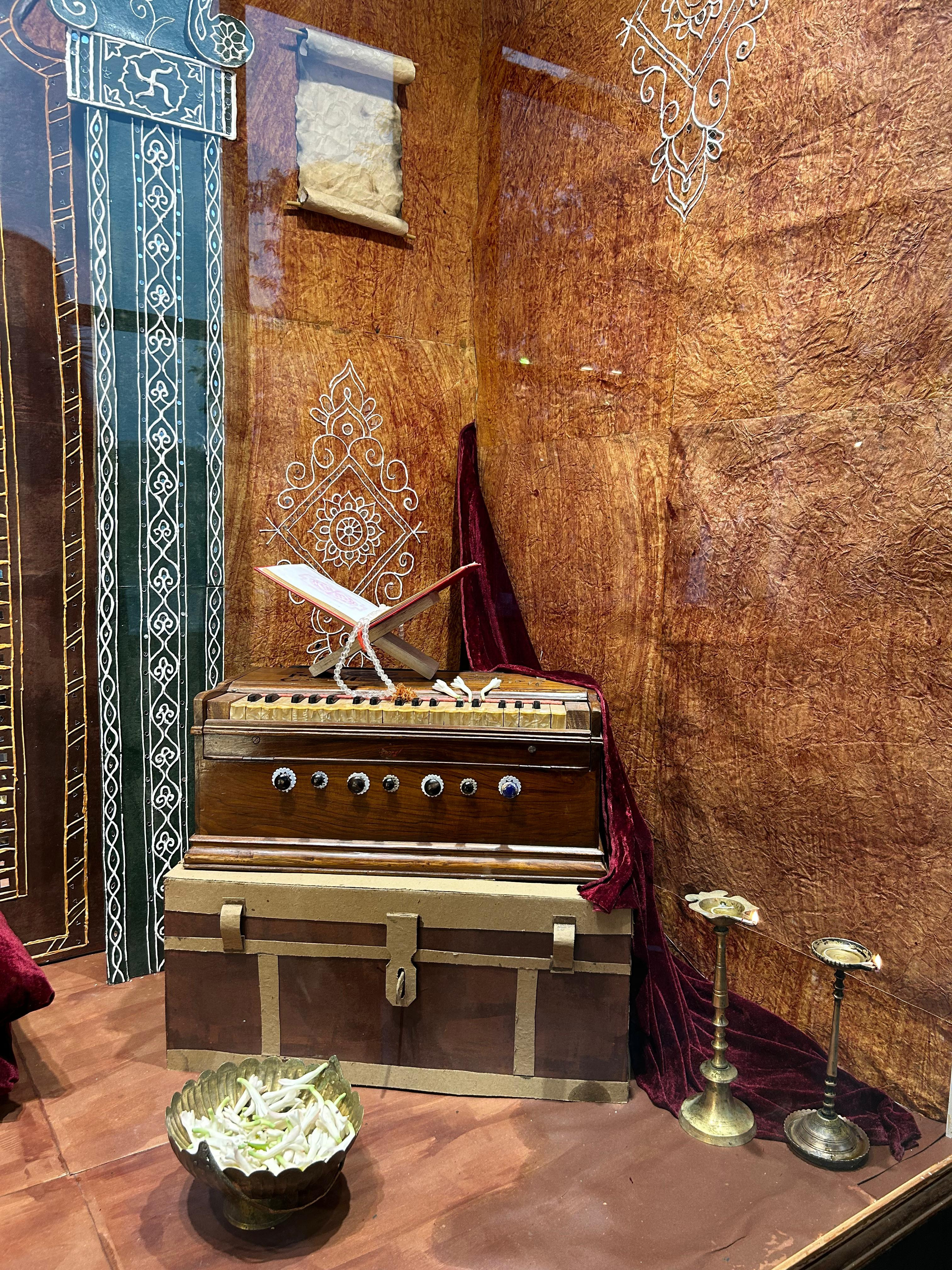
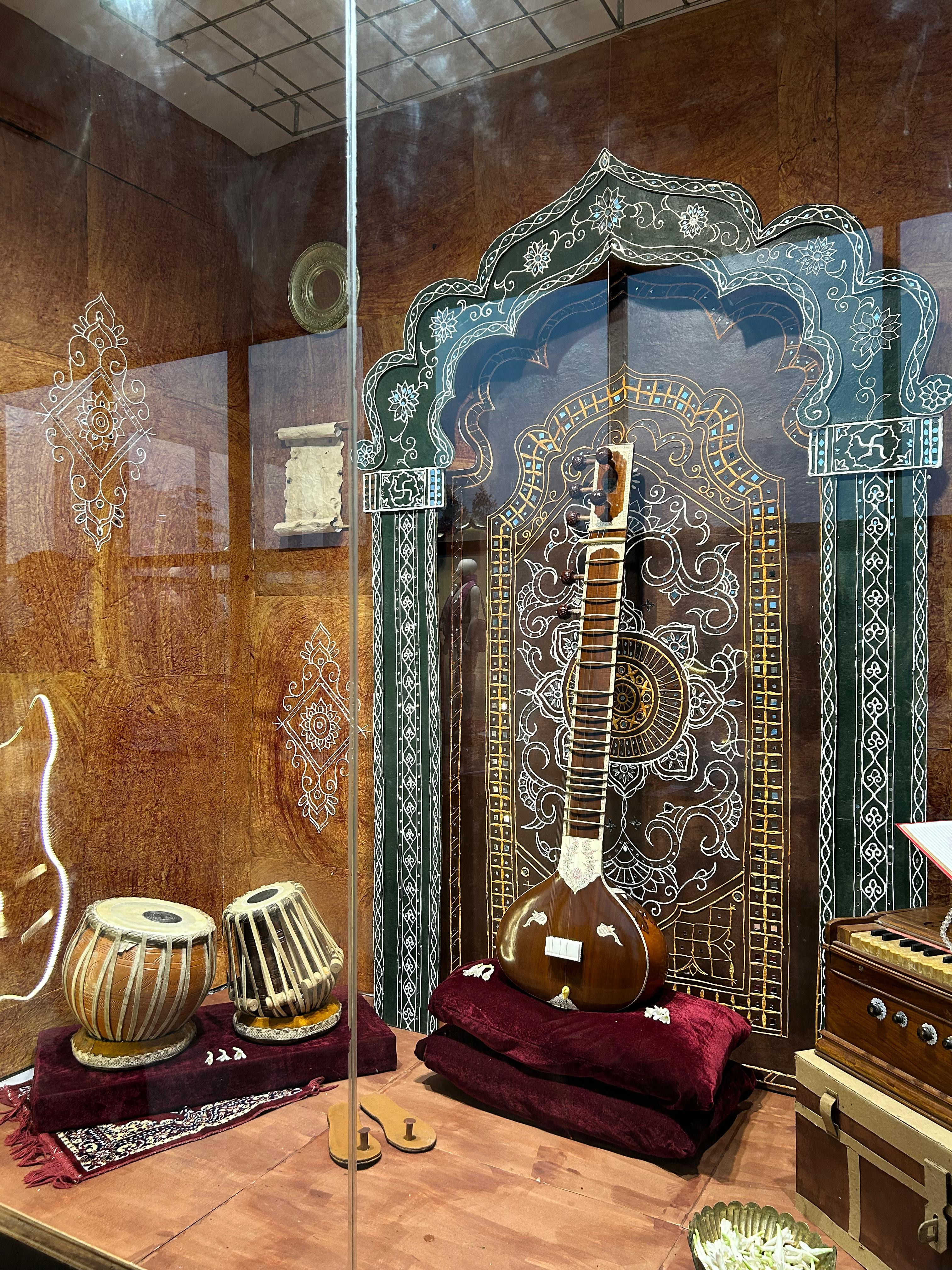
The project begins with Rikhi Ram as the chosen brand, Lippan as the selected craft, and Gurukul as the central theme. The entire window display is developed around the relationship between these three elements.
Rikhi Ram represents the world of Indian classical musical instruments and its long-standing connection with tradition and craftsmanship. To visually express this heritage, Lippan was selected as the craft because its earthy surfaces, handcrafted patterns, and mirror work create a strong connection with traditional Indian craft and architecture. The presentation specifically uses Lippan as a visual language for legacy and craftsmanship.
The Gurukul then becomes the setting and narrative of the display. It represents a space where music, knowledge, discipline, practice, respect, and values are passed from one generation to another. This theme naturally connects with Rikhi Ram’s association with classical music and the idea of preserving musical knowledge.
The central sitar, harmonium, and tabla establish the musical identity, while the khadau introduces the idea of respect and devotion. Arched forms, earthy textures, mirror details, and warm lighting further strengthen the Gurukul atmosphere.
Together, Rikhi Ram, Lippan, and Gurukul form the foundation of the concept, while every other visual element is derived from and supports this central relationship.
NIFT Assistant
Online — Ready to help
AI