Mr Abul Ala ,Asst.Professor
NIFT, Bhubaneswar
The project focused on identifying and understanding a specific garment-related problem through detailed research and analysis. It explored user needs,
environmental conditions, and functional requirements to gain a deeper understanding of the challenges involved. Based on these insights, the project aimed to
develop a thoughtful and innovative design solution that effectively addresses the identified problem. The final outcome focused on balancing functionality,
comfort, practicality, usability, and innovation, while ensuring that the proposed garment solution was relevant to the user and their specific needs.
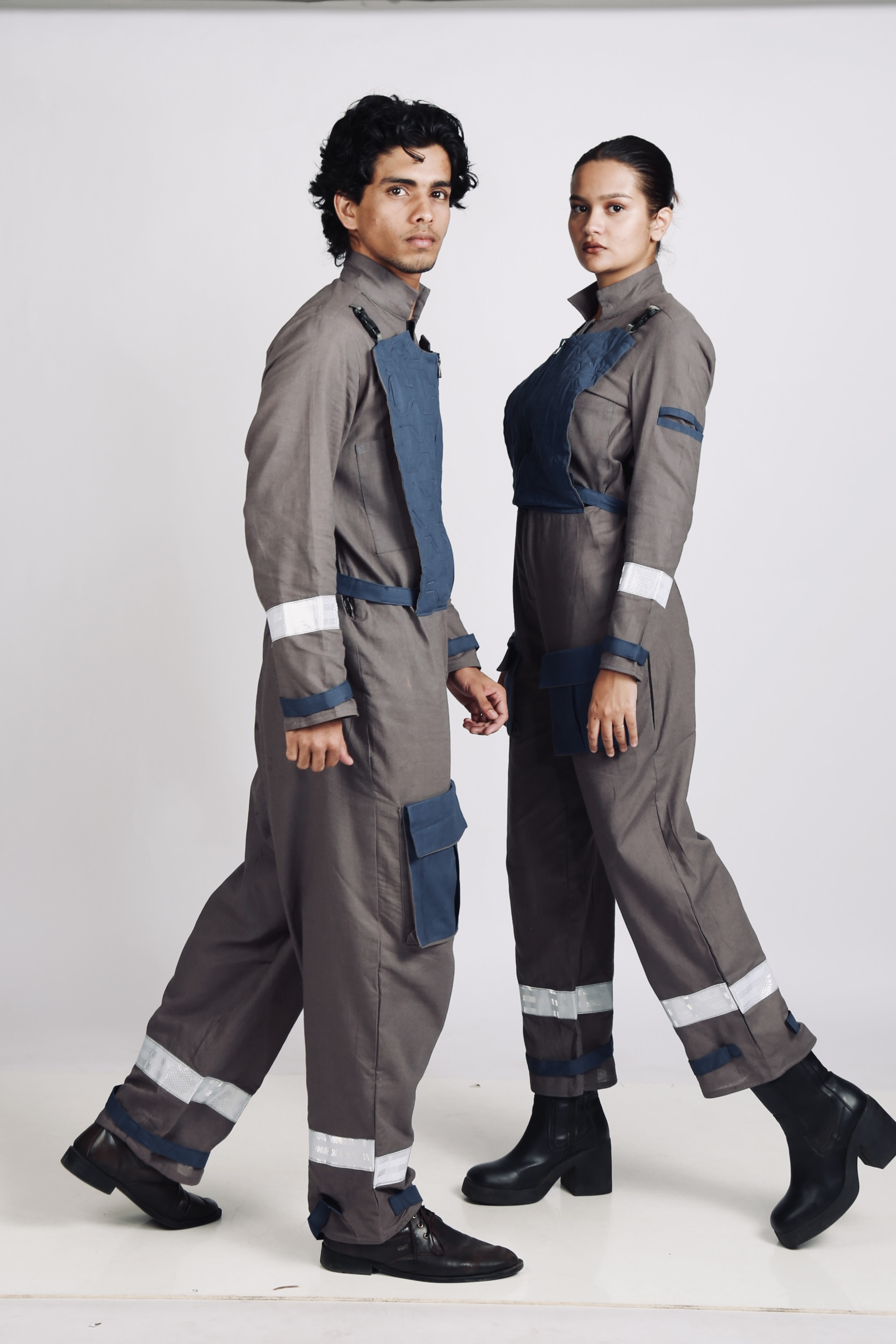
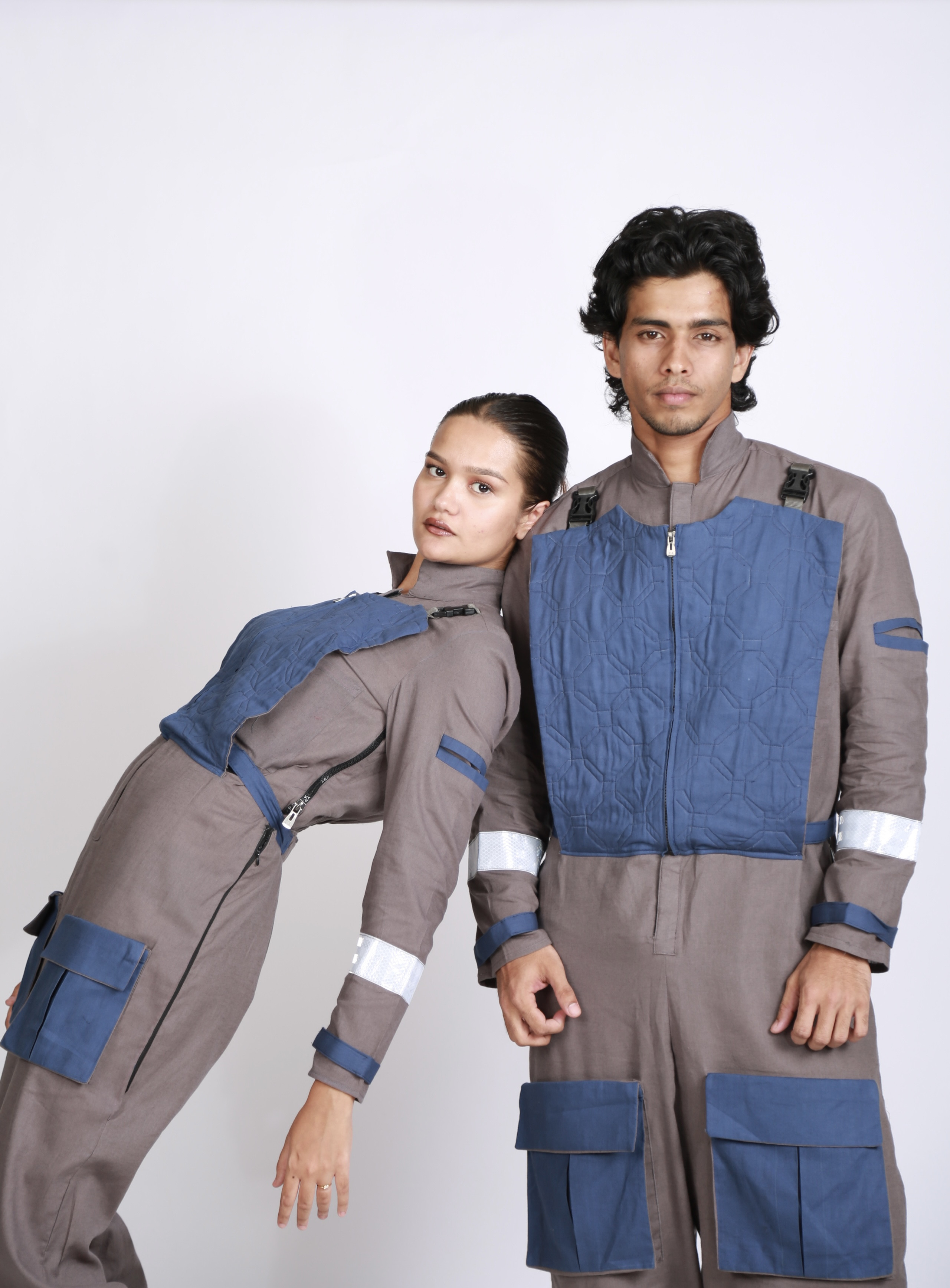
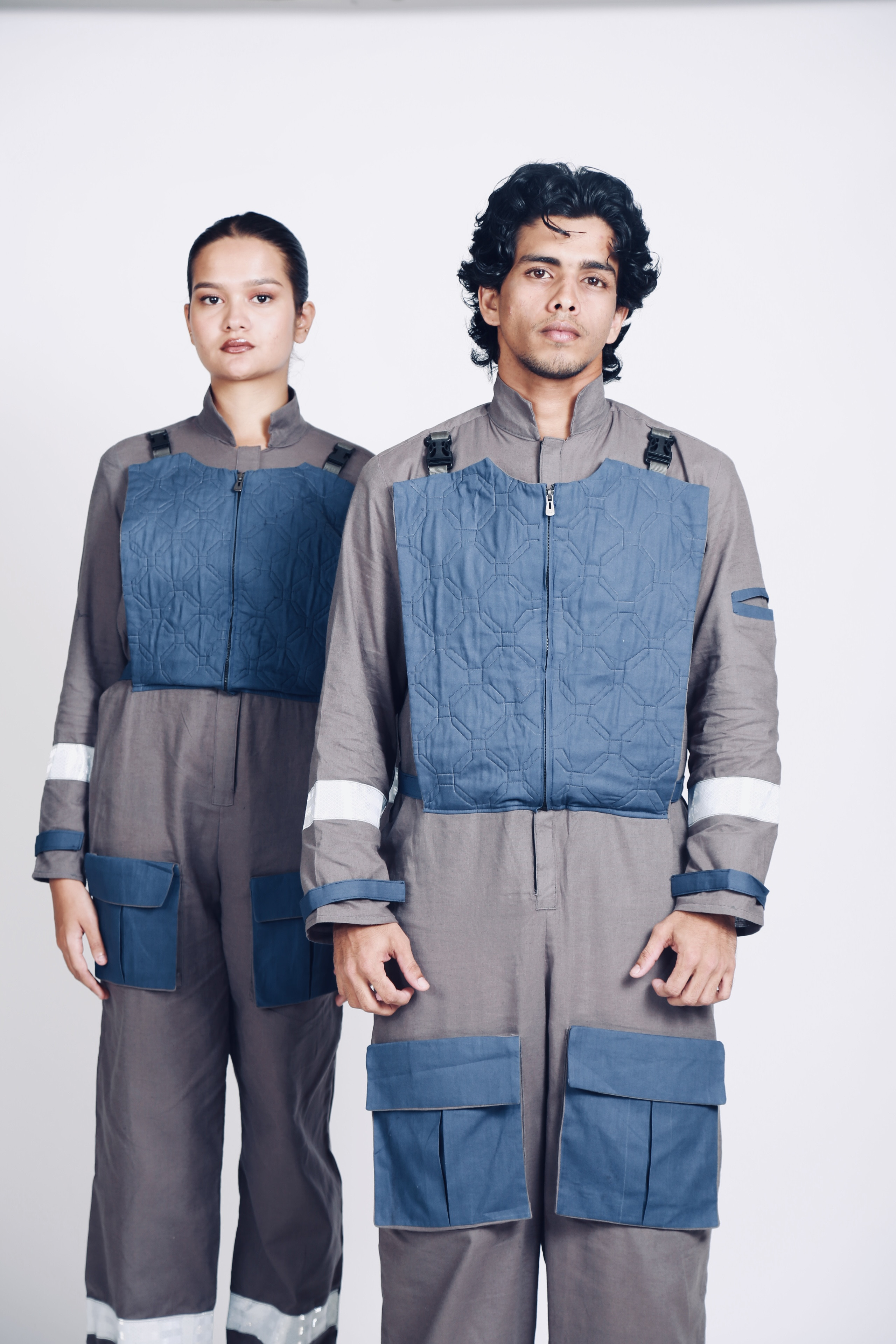
The proposed next-generation Indian Navy uniform is designed to enhance the safety, comfort, and performance of sailors operating in hot, humid, and demanding maritime environments. The uniform combines lightweight, fire-resistant fabrics with advanced textile technologies to provide protection without restricting movement.
A key feature of the uniform is the use of phase-change materials (PCMs), which help regulate body temperature by absorbing and releasing heat as required. This reduces heat stress and helps maintain thermal comfort during prolonged operations. The uniform also incorporates moisture-wicking and breathable layers that efficiently manage sweat, improve air circulation, and keep the body dry and comfortable.
The design includes modular and adjustable components, allowing sailors to modify or add protective elements according to different operational requirements and weather conditions. This adaptability makes the uniform suitable for a variety of naval activities while maintaining ease of movement.
The combination of fire resistance, thermal regulation, breathability, and modular construction creates a high-performance uniform specifically suited to tropical maritime conditions. By reducing heat-related discomfort and physical fatigue, the proposed uniform can improve sailors’ endurance, mobility, and overall efficiency. Ultimately, the design aims to provide a balance between protection, functionality, comfort, and adaptability, ensuring that sailors can perform effectively without compromising their safety
NIFT Assistant
Online — Ready to help
AI