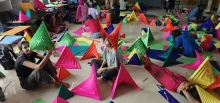
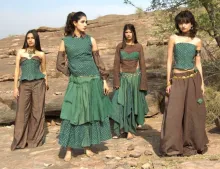
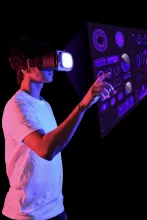
NIFT Panchkula has modern and well-equipped infrastructure that supports quality design education. The campus includes specialised laboratories, design studios, smart classrooms, a well-stocked resource center, and dedicated facilities for garment construction, pattern making, textile and surface development, fashion communication, and digital design. Technology-enabled learning spaces and modern equipment give students practical exposure to design processes.

The two-year Master of Design (M.Des) programme, offered by the Department of Design Space, is specifically structured to address the complex, multidisciplinary nature of contemporary design. Rooted deeply in design thinking, rigorous research, and systematic innovation, the programme builds critical capabilities in sustainability, strategic design, and emerging technologies. It successfully prepares a new generation of designers, researchers, and strategists to navigate and innovate across diverse spatial, experiential, and systemic contexts.
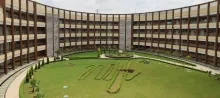

The two-year Master of Fashion Management programme, offered by the Department of Fashion Management Studies, develops professionals for the business, management and strategic dimensions of the fashion industry. The curriculum integrates fashion marketing, merchandising, buying, retailing, sourcing, supply chain management, business analytics, brand and strategic management, global marketing, luxury fashion and entrepreneurship.

The two-semester Foundation Programme forms the common starting point for undergraduate education at NIFT, bringing Design and Fashion Technology students together through a shared learning experience in Design and Technology fundamentals. The programme develops core skills in visualisation, communication, creative thinking, material exploration and digital tools, while introducing students to fashion, technology, sustainability and the wider design ecosystem.

The four-year Apparel Production programme, offered by the Department of Fashion Technology, prepares graduates for the global apparel and textile industry through an integrated understanding of apparel engineering, manufacturing and business management. Spanning the apparel value chain from product engineering to supply chain management, the curriculum combines technical knowledge with emerging technologies, including Artificial Intelligence (AI) and the Internet of Things (IoT), alongside industry-linked learning.

The four-year Fashion Design programme, NIFT’s flagship programme, offers a holistic foundation in design with a focused approach to apparel. The curriculum develops design sensitivity by balancing global fashion aesthetics with an Indian perspective, while addressing the diverse requirements of couture, prêt-à-porter, exports, niche markets and handcrafting.

The four-year Fashion Communication programme, offered by the Department of Fashion Communication, develops versatile design professionals for the fashion, lifestyle, media and creative industries. The curriculum positions communication as a strategic bridge between fashion products, brands and consumers, integrating design thinking, visual communication, technology, Artificial Intelligence (AI), trend research and forecasting, and emerging media.

The four-year Knitwear Design programme, offered by the Department of Knitwear Design, prepares specialised professionals for the evolving fashion, apparel and accessories industries. The curriculum integrates creativity, technology, sustainability and market orientation with hands-on learning across the complete knitwear development process. Students work with flat and circular knits, advanced computerised knitting systems and diverse applications ranging from foundation garments to outerwear.

The four-year Textile Design programme, offered by the Department of Textile Design, prepares designers for the evolving apparel, home and lifestyle textile industries through an integrated understanding of materials, processes, technology and design. The curriculum combines traditional textile practices with contemporary digital tools, material innovation and sustainable approaches.